Planning smart home features during luxury plot construction costs 60 to 70 percent less than retrofitting them after the walls are plastered. The critical infrastructure involves three elements: conduit routing from every room to a central hub, dedicated electrical circuits for automation controllers, and sensor placement points embedded in ceilings and walls during the framing stage. A 4,000 sq ft luxury home needs approximately ₹6 to ₹14 lakh in pre-wiring, covering CAT6A data cables, speaker wiring, HDMI conduits, and motorized curtain tracks. The automation system itself (lighting control, HVAC integration, security, and entertainment) adds ₹8 to ₹30 lakh depending on whether you choose a wired KNX system from Schneider Electric or a wireless Control4 setup. The key decision is not which gadgets to buy but which conduits to run. Gadgets change every three years. Conduits inside walls last the life of the building.
Key Takeaways
- Pre-wiring during construction saves 60-70 percent over retrofitting smart systems into finished homes.
- Run 25 mm conduits from every room to a central hub for data, audio, and future sensors.
- Budget ₹6-14 lakh for pre-wiring and ₹8-30 lakh for the automation system in a 4,000 sq ft home.
- Choose open-protocol systems like KNX over proprietary ones for long-term flexibility and resale value.
- Include two empty conduits per room for technologies that do not yet exist on the market.
The ₹4 Lakh Mistake in Golf Course Extension
Arjun's contractor estimated ₹4.2 lakh to retrofit the missing conduit: ₹1.8 lakh for marble removal and replacement, ₹80,000 for wall chasing and replastering, ₹60,000 for the actual cabling, and ₹1 lakh for repainting. The original conduit, had it been run during the rough electrical phase, would have cost ₹3,500. That is a 120x cost multiplier for a single missed cable run. See our guide on EV charging infrastructure for luxury plots.
This story repeats across premium homes in Bangalore's Whitefield, Hyderabad's Jubilee Hills, and Lucknow's Gomti Nagar Extension. Owners spend ₹5 to ₹8 crore on construction and interiors, then discover they cannot install motorized curtains because there is no power outlet behind the pelmet, or they cannot mount a Sonos ceiling speaker because there is no speaker wire in the slab.
◆ Part of our Luxury Lifestyle Guide
Smart Home Features to Plan During Luxury Plot Construction
The Conduit Network
Think of conduits as the nervous system of your house. Every room needs a 25 mm PVC conduit running to a central wiring closet (CWC) on the same floor. The CWC is a ventilated cupboard, at least 600x600 mm, mounted at chest height, with a plywood backboard for mounting patch panels, switches, and automation controllers. A two-storey home needs one CWC per floor, connected by a vertical riser conduit of 50 mm diameter.
In each room, run the following in separate conduits:
- CAT6A cable: For wired internet, IP cameras, and intercom. Two drops per room minimum.
- Speaker wire: 16-gauge OFC (oxygen-free copper) from brands like QED or AudioQuest for ceiling speakers.
- HDMI conduit: A 32 mm conduit for running HDMI 2.1 cables to the living room, master bedroom, and home theatre.
- Two empty 25 mm conduits: For future sensors, charging pads, or technologies not yet on the market.
Dedicated Electrical Circuits
Smart homes need more circuits than standard homes. Add separate circuits for: motorized curtain tracks (one per window bank), landscape lighting (separate from interior lighting), garage EV charger (15 kW dedicated line), CCTV and security system (UPS-backed), and the automation hub with a dedicated 5A breaker. A standard luxury home has 20 to 24 electrical circuits. A smart-ready home needs 30 to 36.
Choosing the Right Automation System
Most smart home consultants push proprietary systems because they lock you into their service contracts, but open-protocol systems like KNX give you vendor independence at similar cost. Here are the three tiers:
- Premium wired (KNX): Schneider Electric or ABB actuators, Basalte or Zennio touchpanels. Cost: ₹15 to ₹30 lakh for a 4,000 sq ft home. Lifespan: 20+ years. No single-vendor dependency.
- Mid-tier wired/wireless hybrid (Control4 or Crestron): Cost: ₹8 to ₹18 lakh. Excellent integration with audio/video. Requires dealer support for programming.
- Wireless (Lutron Caseta, Philips Hue, Apple HomeKit): Cost: ₹2 to ₹6 lakh. Easy to install post-construction. Limited scalability. Not recommended for homes above 3,000 sq ft or properties valued above ₹5 crore.
Sensor Placement: The Invisible Intelligence
Sensors need to be positioned during construction because many are recessed into ceilings or embedded in walls. Plan locations for:
- Occupancy sensors: One per room, recessed in the ceiling centre. These trigger lighting scenes and HVAC adjustments when you enter or leave. Brands: Schneider, Steinel. Cost: ₹3,000 to ₹8,000 each.
- Temperature and humidity sensors: One per zone, wall-mounted at 1.5 metres height. They feed data to the HVAC automation for per-room climate control.
- Water leak sensors: Under every sink, behind every washing machine connection, and in the HVAC drip tray area. A single leak sensor costing ₹2,500 can prevent ₹5 lakh in water damage.
- Door and window sensors: Magnetic reed switches embedded in the frame during fabrication. Adding them after window installation means surface-mounting, which looks inelegant on ₹25,000-per-window Schuco or Fenesta frames.
The Corner Plot Advantage for Smart Homes
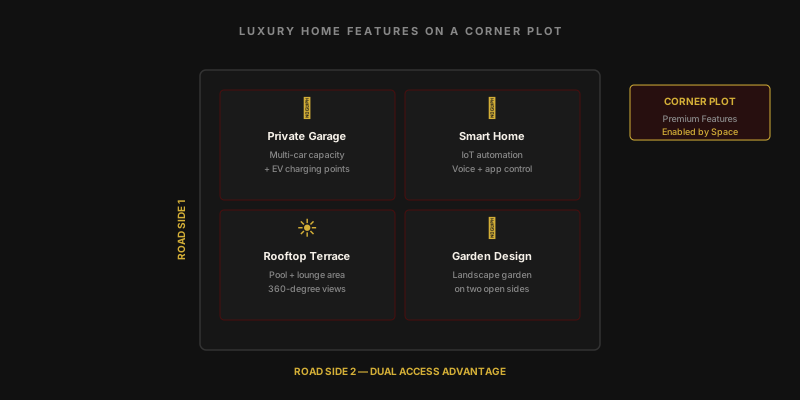
Corner plots naturally support smart home infrastructure better than interior plots. The dual road exposure means your external CCTV cameras have wider sight lines without requiring as many units. Where an interior plot needs 6 to 8 cameras for full perimeter coverage, a corner plot achieves the same with 4 to 5 cameras because two sides face open roads with long-range visibility.
The additional natural light from two sides also reduces dependence on automated lighting during the day, lowering the smart lighting system's load. And the dual-access driveway integrates naturally with ANPR-based gate automation systems, where one entry gate and one exit gate can each run on independent controllers for redundancy.
When building on a corner plot, route your external conduits along the compound wall before the boundary wall is plastered. This keeps all external cabling invisible while providing easy access for future upgrades. Run a 50 mm conduit along each boundary for CCTV power, garden lighting, and perimeter sensors.
In the wiring closet of Arjun's reworked Gurugram home, sixty-four CAT6A cables terminate in neat rows on a Panduit patch panel, the Schneider KNX bus hums silently behind a ventilated door, and every light in the house responds to a single tap on a Basalte touchpanel the colour of wet slate.