Effective vastu for south facing corner plot remedies include elevating the south and west boundary walls to 5-6 feet, placing the main gate on the east or north wall rather than the south, planting tall trees along the southern boundary, keeping the northeast corner as the lowest and most open area, and positioning heavy construction like the master bedroom and overhead tank in the southwest quadrant. These corrections address the primary Vastu concern with south-facing plots — uncontained solar energy from the south — by creating structural barriers that redirect energy flow. When properly applied, south-facing corner plots deliver comfortable, well-balanced living environments. The price discount of 8-15% compared to north or east-facing plots in the same layout creates a genuine value opportunity for buyers who understand that direction is one of several Vastu parameters, not the sole determining factor.
Key Takeaways
- South-facing plots carry an 8-15% price discount that creates genuine value for buyers applying corrections.
- Elevated south and west boundary walls are the single most effective structural Vastu remedy available.
- Gate placement on the east or north wall redirects entry energy away from the unfavourable south zone.
- Tall trees along the southern boundary provide natural energy barriers plus shade and privacy benefits.
- Heavy construction in the southwest quadrant grounds the plot and compensates for southern road exposure.
Why Neha Was Right to Make Vikram Stop
Vikram had grown up hearing his grandmother declare that south-facing homes brought misfortune. That belief, deeply embedded in many Indian families, causes roughly 40% of premium buyers to reject south-facing plots without any analysis. The result is a predictable market distortion: south-facing corner plots in prime locations sit longer on the market and sell at discounts that have nothing to do with the land's actual quality.
The Sector 63 plot Neha had found was exceptional by every metric except primary direction. It measured 2,600 sq ft with a nearly perfect 1:1.3 length-to-breadth ratio. The two roads ran along the south (40 feet wide) and west (30 feet wide) boundaries. The natural slope fell from the southwest corner toward the northeast — ideal for Vastu. The soil was sandy loam with strong bearing capacity. And at Rs 4.7 Crore, it was priced Rs 80 lakh below the only other corner plot in the sector, which faced northeast but measured just 2,100 sq ft.
◆ Part of our Vastu & Compliance Guide
Vikram's grandmother's fear would have cost him Rs 80 lakh and 500 sq ft. Instead, he listened to Neha, hired a Vastu consultant, and spent Rs 6 lakh on corrections during construction. They moved in fourteen months later into a home that their consultant scored at 82% Vastu compliance — higher than many northeast-facing plots with poor slope or irregular shapes.
Vastu Remedies for South Facing Corner Plots That Deliver Results
Remedy 1: Boundary Wall Engineering
The most impactful correction is differential boundary wall heights. Build the south and west compound walls at 5.5-6 feet with a solid construction — no jali or lattice work that allows energy to pass through. The north and east walls should be 3-4 feet, with open grille sections above if needed for aesthetics. This height differential recreates the natural Vastu energy containment that elevated terrain provides in an ideal plot.
In Bangalore's HSR Layout, where several premium south-facing corner homes were built in the early 2010s, this wall correction has proven effective over a decade of occupancy. Residents report no Vastu-related complaints, and these homes have appreciated in line with the broader market.
Remedy 2: Strategic Gate Placement
On a south-facing corner plot with roads on the south and west, place the main entrance gate on the south wall but in its southeast section — the fourth pada from the left when facing south. Better yet, if the plot layout allows, create vehicular access from the west road with the pedestrian gate on the south wall's southeastern section. This creates a layered entry experience that Vastu considers more controlled than a direct southern entry.
Remedy 3: Landscaping as Energy Management
Many Vastu practitioners recommend only symbolic remedies like hanging crystals or placing pyramids. In our experience, physical and structural corrections — trees, walls, and grading — produce far more measurable improvements in comfort and energy balance than decorative or symbolic objects.
Plant a row of tall, dense trees along the south boundary. Ashoka trees grow to 10-12 metres and provide a dense vertical screen. Neem trees offer similar height with broader canopies. Along the west wall, use medium-height trees like curry leaf or drumstick trees that provide coverage without excessive root spread. Keep the northeast corner as open lawn or garden with low groundcover and a small water feature — a fountain or birdbath — to activate the water element in this zone.
Remedy 4: Interior Layout Positioning
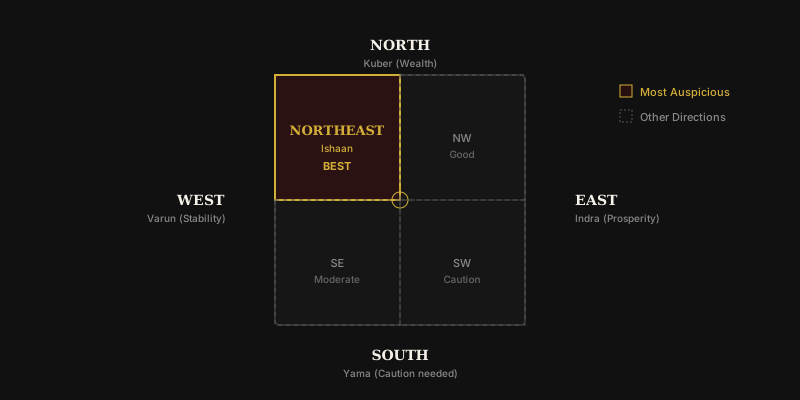
Place the master bedroom, heavy storage rooms, and overhead water tank in the southwest quadrant. The kitchen works well in the southeast. The prayer or meditation room should sit in the northeast. Living areas and children's rooms perform best in the north and east zones. This interior arrangement compensates for the external south-facing orientation by ensuring that the home's internal energy distribution follows Vastu principles regardless of plot direction.
The Real Cost of South-Facing Plot Corrections
Buyers often overestimate the cost of Vastu corrections. Based on PrimePlot's data across four cities, here is what south-facing corner plot corrections typically cost:
- Differential boundary walls: Rs 1.5-3 lakh (depends on wall length and material)
- Landscaping and trees: Rs 1-2 lakh for mature tree planting along two boundaries
- Water feature in northeast: Rs 50,000-1.5 lakh depending on design
- Interior layout adjustments: Minimal additional cost when planned during architectural design
- Vastu consultant fees: Rs 25,000-50,000 for the correction design
The total ranges from Rs 3.5-8 lakh — well under 2% of a Rs 3 Crore plot purchase. Compare this to the 8-15% discount you receive for buying south-facing instead of northeast-facing, and the value proposition becomes clear. On a Rs 5 Crore purchase, the direction discount saves Rs 40-75 lakh, while the correction cost is under Rs 8 lakh. The net saving funds a significant portion of the home construction itself.
South-Facing Plots in Specific Markets
The practical impact of south-facing orientation varies by city due to climate and cultural factors:
Bangalore: The moderate climate (average high of 33 degrees Celsius in summer) means south-facing exposure is less problematic than in hotter cities. Cross-ventilation from the southeast monsoon winds actually benefits south-facing plots. Corrections here are minimal.
Hyderabad: Hotter summers (42+ degrees Celsius) make south-facing corrections more important. Heavy tree planting and reflective exterior wall surfaces on the south side can reduce internal temperatures by 3-4 degrees. In areas like Narsingi and Manikonda, south-facing corrections have become standardized practice among premium architects.
Lucknow: Extreme summers (46+ degrees Celsius) require aggressive southern shading. However, in winter, the south-facing exposure provides welcome warmth. Seasonal adaptability through deciduous trees on the south boundary — leafy in summer for shade, bare in winter for warmth — works exceptionally well here.
Gurugram: Similar to Lucknow in climate extremes. South-facing plots in Sectors 57-67 benefit from deep verandahs on the south side that block direct summer sun while allowing winter warmth. Several premium architects in Gurugram now specialize in south-facing Vastu-corrected designs.
On Vikram's south-facing terrace in Sector 63, the ashoka trees now stand tall enough to filter the afternoon light into something golden, and the evening breeze from the northwest carries the scent of the curry leaf hedge his wife planted along the western wall.